Here are some sources/solutions for common diseases or problems with Evergreens:
|
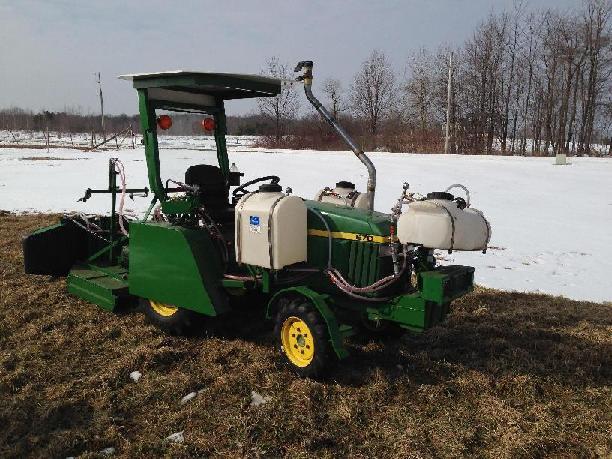 |
| Tractor with shielded 2-4D sprayer. Spray Roundup or 2-4D and Mow at the same time! |
|
|
Winter burn from our Harsh Winter – Winter burn causes brown or red needles on the exposed side of the tree – often south. It is actually caused by needles drying out because they are losing more water than they can take up from frozen soils. In addition to exposure (where needles are warmer and losing more water), wind exposure and genetics (some species are more tolerant) affect the likelihood of seeing winter burn. What to do? Wait and see, as it usually affects only needles and not buds so the new needles will be fine.
(Dr. Elizabet Lamb, NYS Integrated Pest Management Program)
|
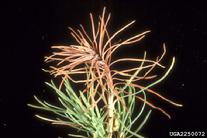 |
| Diplodia Tip Blight |
|
|
The article:
The Role of Shearing in the Management of Diplodia Tip Blight by Amy Bateman, John Hartman, and Lisa Vailancourt
American Christmas Tree Journal-July 2009 issue
Order American Christmas Tree Journal at http://www.christmastree.org/journal.cfm
Diplodia, Dothistroma and brown spot, attack conifers at the needles and on twig tips. Infected needles often fall from the tree, creating a denuded look. Blight can result in dramatic browning of the foliage, beginning on the lower branches. Repeated annual cycles of infection can result in dead limbs and eventual loss of any meaningful ornamental value.
|
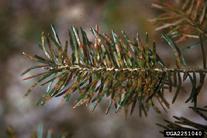 |
| Rhabdocline Needlecast |
|
|
Rhabdocline needle cast is in a group of tree diseases that causes conifers to shed needles. The symptoms of needle cast tree disease first appear on needles as light green to yellow spots, which eventually turn red or brown. Growth of the fungi from the spots on the needle will cause death of the entire needle. Tiny black fruiting bodies form on the surface of the needles before or after the infected needles are shed. Timing of spray is essential for control. Feel free to call Duane Berkey with questions. (814)654-7043 or email at info@berkeysnursery.com
|
Rhizosphaera
Are you experiencing rhizosphaera on your Colorado Blue Spruce?
We spray them when approximately 40% of the new growth is out and then again 2 weeks later using
2 quarts of Weatherstick Bravo per acre.
|
|